NYC homeowner guide
Smart Home Installation in NYC
A video doorbell and a smart thermostat both look like the kind of thing you buy at a hardware store and install yourself in twenty minutes. Sometimes that is true. What actually decides it is not simply whether a wire is involved, it is what that wire connects to and what it controls, and NYC's own electrical code treats that distinction specifically. This guide covers two common smart-home starter projects: what they cost, when NYC's rules mean you need a licensed electrician, and how to hire someone you can trust when you do.
Quick Takeaways
- This guide covers two common NYC smart-home starter projects, video doorbells and thermostats. Smart locks and security cameras are close cousins covered by ServHom's locksmith and security-systems guides instead, since they involve different licenses.
- A wireless, battery-powered device generally involves no electrical wiring at all and falls outside NYC's electrical licensing rules entirely.
- The presence of a wire does not by itself decide the licensing question. What the wire actually connects to and what it controls does: a doorbell transformer falls under a specific NYC Department of Buildings category, while a thermostat's connection to a heating or cooling control circuit falls under a different, narrower rule. Both are real, checkable licensing requirements, not a general handyman rate, but they are not the same rule.
- A single smart-home device commonly runs $165 to $600 installed in NYC; multi-zone thermostat work or new wiring can push a project past $1,000. See the full guides below for the real, job-by-job breakdown.
- This guide references NYC's Electrical Code as amended through the 2025 edition, which took full effect December 21, 2025.
- On ServHom no installer can pay to rank higher, and we surface trust signals where we have them.
What counts as smart home installation, and what does not
"Smart home" is a broad label that covers genuinely different jobs with different rules. This guide covers two common starter projects specifically: video doorbells and smart thermostats, both small devices that connect into your home's existing electrical or doorbell wiring rather than needing new circuits run. It does not cover whole-house automation, smart lighting or switches, or structured wiring, which are different projects with their own considerations.
Two close cousins are common enough to name explicitly, since they are easy to lump in with "smart home" but are covered elsewhere: a smart lock is a locksmith job, with its own license and legal considerations (including a real step renters often miss), covered in the locksmith guide below. A standalone security camera or alarm system is covered in the security-systems guide below, including the state license (a different one from electrician licensing) that installing security or fire alarm equipment for someone else actually requires, and the same building rules discussed further down this page.
What to check before you hire
Hiring someone for a smart home install usually comes down to three questions: is this actually a job you can safely do yourself, is the quote fair, and if you do hire someone, are they actually qualified to do this specific kind of work. The answer to all three depends heavily on whether real electrical wiring is involved, not on how small or simple the device looks in the box.
You can run every one of these checks yourself. ServHom brings license and business information together in one place so you do not have to hunt for each one separately, and no installer can pay to rank higher here.
When smart home installation actually needs a licensed electrician
This is the part most product instructions never mention, and the real rule is more precise, and more interesting, than a simple "wired means call an electrician" shortcut. NYC's electrical code does not treat all low-voltage wiring the same way. The presence of a wire does not by itself decide the licensing question, what that wire actually connects to and what it controls does, and this guide references NYC's Electrical Code as amended through the 2025 edition, which took full effect December 21, 2025.
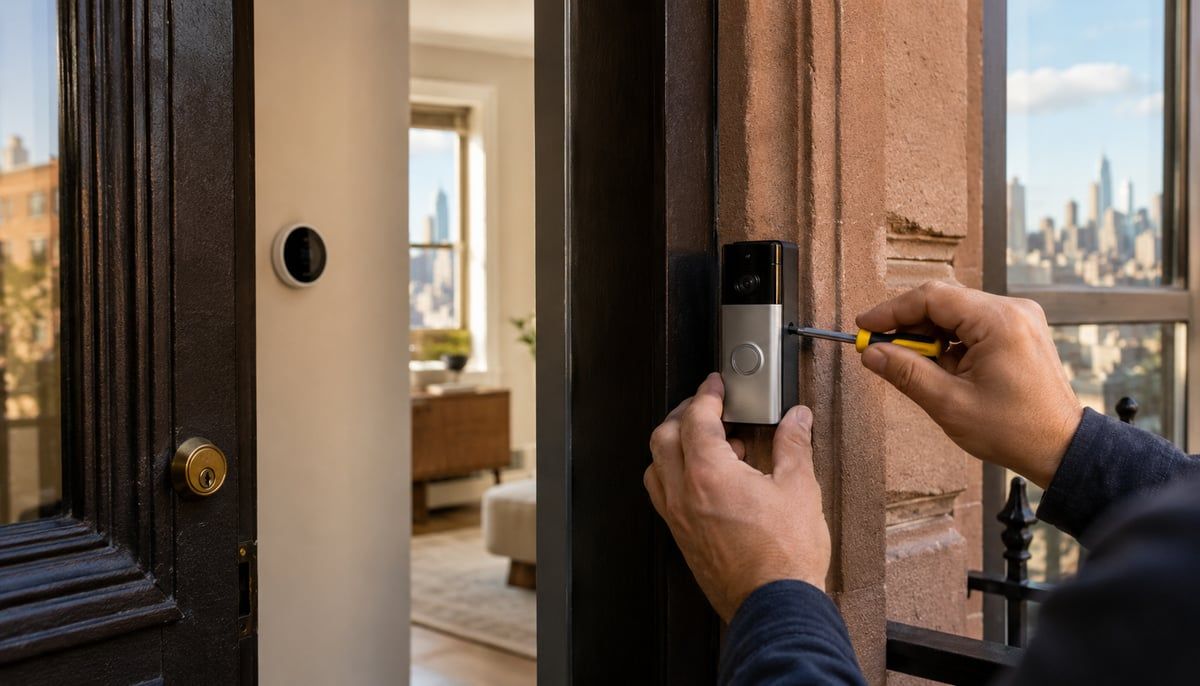
A wired video doorbell connects to your home's existing doorbell transformer. NYC's Department of Buildings lists "installation of transformers rated at one thousand volt-amperes or less," which describes a doorbell transformer, under what the city calls "Minor Electrical Work." That category still requires a NYC Licensed Master Electrician and a permit, just not a full DOB inspection, covered in full, including the exact source, in our video doorbell cost guide.
A smart thermostat is a different case with the same underlying theme. NYC's low-voltage electrical work rule (Admin Code 28-105.4.7, part of the same 2025 Electrical Code) generally lets a broader "qualified person" handle ordinary low-voltage wiring without a permit, but it specifically carves out any wiring that interfaces with a control circuit that activates a light, heat, or power circuit, exactly the connection a thermostat makes, as requiring a licensed master or special electrician specifically for that connection. The full breakdown, including the regulation's exact language, is in our smart thermostat cost guide.
The pattern across both: a wireless, battery-powered device with no wiring at all generally falls outside these rules entirely. The moment a device connects into your home's existing electrical or low-voltage system, which specific rule applies depends on what that connection actually does, not simply on whether a wire is present, and it is worth checking the specific device's own guide rather than assuming one device's answer applies to another. Do not assume a general handyman can make either connection legally; both are reserved for a NYC-licensed electrician specifically.
What smart home installation costs in NYC
A single smart-home device commonly runs $165 to $600 installed in NYC. A simple wireless setup sits toward the low end; a wired connection, a new run of C-wire, or a multi-zone thermostat setup pushes it higher, and a multi-zone or unusual-wiring project can run $1,000 or more. These are editorial planning ranges from real published NYC and national cost data, not ServHom's own benchmark data, since ServHom does not yet have enough submitted smart-home price reports of its own to publish a fair-price benchmark for this service. See each full guide below for the complete breakdown, an interactive cost chart, and the sourcing behind these numbers.
Three separate costs are worth tracking, not just the device itself: the hardware (what you buy), installation (what someone charges to mount, wire, and configure it, genuinely $0 for a real DIY job), and any ongoing subscription (cloud video storage, advanced alerts, or professional monitoring), which is easy to overlook when comparing a sticker price.
| Project | Typical cost range | Biggest cost driver |
|---|---|---|
| Video doorbell, wireless | $165 to $480 | Camera and smart features |
| Video doorbell, wired | $210 to $530 | Labor if you hire an electrician |
| Smart thermostat, existing wiring works | $250 to $500 | Thermostat type and features |
| Smart thermostat, new C-wire needed | $300 to $600 | Running the new wiring |
| Smart thermostat, multi-zone | $400 to $1,000+ | Number of zones |
Before you install anything in a co-op, condo, or rental
Electrical licensing is only one part of the question in a NYC apartment. A video doorbell or camera pointed at a shared hallway raises the same building-approval issue covered in ServHom's DIY home security guide: many NYC co-op and condo boards require approval before installing a video doorbell outside an apartment, restrict a doorbell from directly facing another resident's door, and limit audio recording, independent of whether the installation itself needs a licensed electrician. Check your building's own rules, and your lease if you rent, before you buy a camera-equipped device, not after you have already mounted one.
DIY vs hire: a quick way to tell
| Situation | DIY or hire | Why |
|---|---|---|
| Wireless or battery-powered device, no wiring at all | DIY-friendly | Outside NYC's electrical licensing rules entirely |
| Reconnecting the same existing wires to the same terminals | Often DIY | Manufacturers design setup guides assuming exactly this |
| A new doorbell transformer, or running a new C-wire | Hire a licensed electrician | Falls under the specific NYC rules covered above |
| Multi-zone thermostat setup | Hire recommended | More wiring and coordination to get right |
| Not confident doing it yourself, regardless of the rule | Hire | A valid reason on its own, independent of what is technically required |
How to vet a smart-home installer
If your project points toward hiring someone rather than doing it yourself, checking credentials matters, the same as it would for any electrical work in your home.
- Ask specifically who is making the wiring connection and whether they hold the license that specific type of connection requires (a NYC electrician license for the cases described above), then look up the license yourself rather than taking their word for it.
- Get the scope in writing: the specific device and model, whether new wiring is needed, any electrical work involved, and the total, not just an hourly labor rate.
- Many lead-generation sites treat "verified" as little more than a paid listing fee, not an actual license check. ServHom's license verification is pulled from a public record, not a badge a business paid to display.
Finding an installer you can trust
Once you know whether your project is genuinely a DIY job or a licensed-electrician connection, the next challenge is finding someone accountable to do it, not just first to answer the phone. Most ways to find one either sell your contact details to a list of companies who all reach out at once, or rank whoever pays the most for placement.
ServHom does neither: no installer can pay to rank higher, ever. Zero city/service listing pages for smart-home installers specifically exist yet, so use the search below to see current listings.
How to use this before you hire
Use the checks in this guide no matter who you end up hiring. When you are ready to compare providers directly, ServHom shows source-labeled business facts and money-blind ranking for NYC pros, so you can see why a business is listed, not just that it is.
FAQ
How much does a smart home installation cost?
It depends heavily on the specific device and whether wiring is involved. A video doorbell commonly runs $165 to $530 in NYC; a smart thermostat commonly runs $100 to $1,000 or more depending on type and wiring. See each device's full cost guide for the complete breakdown.
Does smart home installation need a licensed electrician in NYC?
It depends on the specific device and connection, not simply on whether the job involves any wire at all. A wired video doorbell's transformer falls under NYC's "Minor Electrical Work" category; a smart thermostat's connection to a heating or cooling control circuit can trigger a narrower rule reserved for a licensed master or special electrician specifically. A wireless, battery-powered device generally falls outside these rules entirely. Check the specific device's own guide rather than assuming one device's answer applies to another.
Can a handyman install a smart thermostat in NYC?
Not for the wiring connection itself, if it falls within NYC's low-voltage control-circuit rule. That rule reserves the connection specifically for a licensed master or special electrician, not the broader category of "qualified person" that covers some other low-voltage work. Do not assume that because a thermostat wire is low voltage, a general handyman can legally make the connection. A simple like-for-like swap onto the same existing wires is a different, more commonly self-installed case, covered in the full thermostat guide.
Do I need my landlord's or co-op's permission to install a video doorbell?
Often, yes, separate from any electrical licensing question. Many NYC co-op and condo boards require approval before installing a video doorbell outside an apartment and restrict it from facing another resident's door, regardless of whether the installation itself needs a licensed electrician. Renters should check their lease and building rules. Confirm with your building management before you buy, not after you have mounted a camera facing a shared hallway.
What do I need to turn my house into a smart home?
There is no single starting point, most homeowners start with one or two devices rather than a whole-house overhaul. A video doorbell and a smart thermostat are common, relatively inexpensive starting projects. A smart lock and a security camera or alarm system are common next additions, covered separately in ServHom's locksmith and security-systems guides since they involve different licenses and legal considerations.
Are smart homes worth the money?
It depends on the device. A smart thermostat has a real, sourced payback case: ENERGY STAR-certified models save an average of about 8 percent on heating and cooling bills, roughly $50 a year. At that average, a $250 to $500 installation would take roughly five to ten years to recover through energy savings alone, before any rebate. Con Edison also pays a real $85 enrollment rebate on specific eligible thermostat models for customers with central air conditioning, which shortens that further if you qualify, covered in full in the thermostat guide. A video doorbell and most other smart-home devices are more about convenience and security than a direct financial payback, worth weighing against your own actual use case rather than assuming either device pays for itself automatically.
What are the downsides of smart homes?
The most common real drawbacks: dependence on a working WiFi connection and, for some features, an internet connection generally; optional subscription fees for cloud video storage or advanced features that are easy to overlook when comparing the sticker price; compatibility limits, since not every smart thermostat works with every heating or cooling system, and not every video doorbell works with every existing chime; and, for wired devices specifically, the real possibility that installation is more involved, and more regulated, than a simple DIY swap.
Related guides
8 min read
How Much Does Video Doorbell Installation Cost in NYC?
A $30 doorbell camera can turn into a real electrical job the moment wiring is involved, and most people never stop to ask whether that work actually needs a licensed electrician. Here is what video doorbell installation actually costs in NYC, and when a box on the wall stops being a weekend project.
9 min read
How Much Does Smart Thermostat Installation Cost in NYC?
Buying the thermostat yourself does not automatically make installation cheap, and the hardware is often not the expensive part. Here is what smart thermostat installation actually costs in NYC, what to check before you buy one, and the precise, narrow reason the wiring itself can legally require a licensed electrician even when the swap looks like a five-minute job.