NYC homeowner guide
Hiring an HVAC Contractor in NYC
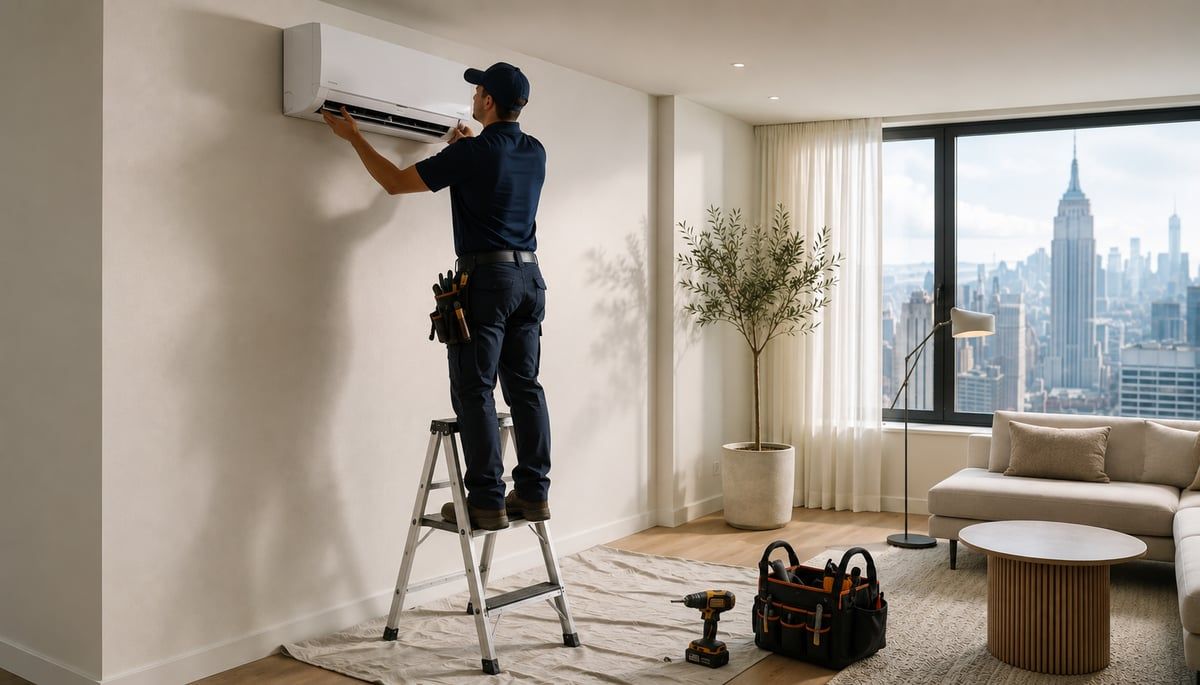
A practical guide to hiring an HVAC contractor in New York City: what certifications matter, how NYC buildings shape your options, what to expect on cost, and how to find reliable pros in your borough.
Quick Takeaways
- Any technician handling refrigerants must hold an EPA Section 608 certification. Ask to see it.
- NYC building type determines your system options: pre-war walk-ups often use window ACs or mini-splits; newer buildings may have central air or VRF systems.
- For gas-connected or duct-altering work, NYC DOB permits are usually required. Confirm before work starts.
- Full system replacements are major purchases. Get at least 3 written quotes for the same scope.
- ConEd and NYSERDA offer rebates for high-efficiency equipment - ask your contractor about them.
- On ServHom no contractor can pay to rank higher, and we surface EPA and licensing credentials where we have them.
Compare hvac prices and pros
Real prices and licensed local pros, all in one place. Nobody pays to rank higher.
Start here: how ServHom is different
Most ways to find an HVAC contractor either sell your contact details to a pile of companies or rank whoever pays an ad. ServHom does neither. We surface certified contractors, show the credentials we hold on file, and never let anyone pay to rank higher.
Use this guide to hire safely, then compare local HVAC pros and what people actually paid using the links throughout.
What certifications matter
Unlike plumbing, there is not one universal NYC HVAC license. The credentials you need depend on the type of work being done, but two carry real weight.
- EPA Section 608 certification: required by federal law for any technician who handles refrigerants (R-410A, R-22, etc.). Any pro doing AC work should hold this. Ask to see it.
- NYC DOB licensing: gas-piping and duct work that touches the building structure typically requires a DOB permit and a licensed contractor. Confirm before work starts.
- Manufacturer certifications (Carrier, Trane, Mitsubishi): not required, but they indicate trained installers and sometimes extend equipment warranties.
- Insurance: general liability and workers compensation coverage protect you if something goes wrong. Always ask for a certificate of insurance.
NYC buildings and your system options
New York City's building stock is unusually varied, and the right HVAC system depends almost entirely on your building type and lease or co-op rules.
- Pre-war walk-ups (no ducts): window ACs are common for cooling. Mini-splits (ductless systems) are increasingly popular because they can heat and cool without ductwork and are eligible for rebates.
- Post-war buildings with existing ducts: central forced-air systems or fan coil units are typical. Replacement follows the existing layout.
- Newer construction: may have variable refrigerant flow (VRF) systems or building-wide chillers. These require specialized contractors.
- Co-ops and condos: your board may restrict which systems you can install or require approval before any work. Check your house rules before getting quotes.
| System | Best for | Typical NYC use |
|---|---|---|
| Window AC | Renters, cooling only | Pre-war apartments |
| Mini-split | Apartments with no ductwork | Excellent fit, rebate-eligible |
| Central air | Houses or buildings with existing ducts | Excellent fit if ducts exist |
| VRF / building-wide chiller | Larger buildings, new construction | Specialist contractor required |
How to choose and vet a contractor
A reliable HVAC contractor will be transparent about credentials, scope, and price. Red flags are easy to spot once you know what to look for.
- Confirm the EPA 608 cert and ask about any NYC DOB licensing for your specific job.
- Get a written scope: the exact system, the model, installation steps, permits if required, and the warranty.
- Ask about rebates. ConEd's Clean Heat program pays up to $10,000 toward a qualifying air-source heat pump or mini-split (roughly $4,000 for apartments and $8,000 for single-family homes on a full system swap, higher in designated Disadvantaged Communities), applied directly to your invoice, not a mail-in reimbursement. NYSERDA runs additional statewide incentives. A good contractor knows both programs and can help you apply.
- Be cautious of cash-only quotes, large upfront deposits, or anyone who discourages getting a second opinion.
- For replacements or new installs, get at least 3 quotes for the same system type and scope.
Before the contractor visits
Having a few details ready before the visit speeds up the diagnosis and helps the contractor show up with the right parts.
- Photos of the equipment, if it is safe to take them.
- The system's make, model, and approximate age if you know it.
- A clear description of the problem: no heat, no cooling, unusual noise, or something else.
- Whether the issue affects heating, cooling, or both.
- Any building or co-op/condo approval requirements for the work.
What HVAC work costs in NYC
Most NYC HVAC contractors bill $100 to $200 an hour for standard work, plus a separate $75 to $200 service call or diagnostic fee just for the visit. After-hours and emergency calls typically push that service call fee to $150 to $300, sometimes with a higher hourly rate on top.
Beyond labor, total cost depends on the job: an AC service call or tune-up is at the low end, while a full mini-split installation or central-system replacement can run from several thousand to tens of thousands of dollars. Permits, refrigerant type, and building access all affect the price too.
To see and add what real homeowners paid for specific HVAC jobs in NYC, use the fair-price page linked below.
Should you repair or replace?
A common rule of thumb multiplies your system's age in years by the estimated repair cost: if that number is over $5,000, replacement is usually the better long-term value. A 12-year-old unit with a $600 repair (12 x $600 = $7,200) leans toward replacing; a 6-year-old unit with a $450 repair (6 x $450 = $2,700) usually still makes sense to repair.
Treat that as a starting point, not the final word. It does not account for the type of repair (a thermostat is a very different decision than a compressor), the refrigerant type (older R-22 systems are being phased out and parts are increasingly expensive and hard to find), or how often the system has already broken down. A contractor who walks through that tradeoff with you is worth more than one who just quotes a number.
Emergencies: no heat or no cool
No heat in winter and no cooling during a heat emergency are the two HVAC situations that cannot wait. For heat loss in winter, contact your landlord first if you rent. NYC's Heat Season runs October 1 through May 31: during the day (6am to 10pm), landlords must keep apartments at least 68 F whenever it is below 55 F outside; overnight (10pm to 6am), the inside temperature must stay at least 62 F regardless of the outside temperature. Hot water is required year-round at a minimum of 120 F. If you own, call a licensed contractor right away. Expect emergency and after-hours rates to be higher than scheduled visits.
HVAC contractors by borough
Response times, contractor availability, and pricing differ across NYC. Use the links below to compare vetted HVAC pros in your borough.
How to use this before you hire
Use the checks in this guide no matter who you end up hiring. When you are ready to compare providers directly, ServHom shows source-labeled business facts and money-blind ranking for NYC pros, so you can see why a business is listed, not just that it is.
FAQ
Does an HVAC contractor need to be licensed in NYC?
Unlike plumbing, there is not one universal NYC HVAC license, but specific types of work do require credentials. Any technician handling refrigerants must hold an EPA Section 608 certification (federal requirement). Work that involves gas piping or structural duct changes typically needs a NYC DOB permit and a contractor licensed for that scope. Always ask what permits your job requires before work starts.
What is a mini-split and is it a good option for my NYC apartment?
A mini-split (ductless system) heats and cools using an outdoor compressor and one or more indoor air handlers, without ductwork. It is well-suited to NYC pre-war apartments that have no existing ducts. Modern mini-splits are highly efficient and qualify for ConEd and NYSERDA rebates. If your co-op or condo allows it, a mini-split is often the cleanest solution for year-round comfort.
How do I know if I need a permit for HVAC work?
A permit is generally required for new or replacement central-air systems, gas-line connections, and any work that alters building structure or ductwork. A common window AC unit typically does not need a work or equipment-use permit unless it exceeds 3 tons (36,000 BTU/hr), per NYC DOB guidance. A fan coil unit is different: it often ties into refrigerant lines or existing ductwork, so do not assume a swap is permit-free just because it is like-for-like. If you are unsure, ask the contractor to confirm in writing before work starts. Unpermitted work can create issues when you sell or refinance.
Are there rebates for HVAC upgrades in NYC?
Yes. ConEd's Clean Heat program pays up to $10,000 toward a qualifying air-source heat pump or mini-split, applied directly to your invoice, roughly $4,000 for apartments and $8,000 for single-family homes on a full system replacement, with higher amounts in designated Disadvantaged Communities. NYSERDA runs additional statewide incentives. Program amounts and eligibility change, so ask your contractor to confirm current numbers and help you apply.
What should a written HVAC quote include?
A solid quote should specify the system make and model, the scope of installation or repair, any permits required, the refrigerant type, the labor warranty, and the equipment warranty. If any of those are missing, ask before you sign.
What does an HVAC contractor charge per hour in NYC?
Most NYC HVAC contractors bill $100 to $200 an hour for standard work, plus a separate $75 to $200 service call or diagnostic fee for the visit itself. After-hours and emergency calls typically push that service call fee to $150 to $300. Ask for both the hourly rate and the service call fee in writing before the visit.
What is the $5,000 rule for HVAC?
It is a rule of thumb, not an exact formula: multiply your system's age in years by the estimated repair cost. If the result is over $5,000, replacement is usually the better value than another repair. It is a useful starting point, but it does not account for the specific repair needed or a refrigerant phase-out like R-22, so treat it as a conversation starter with your contractor, not a final answer.
Related guides
9 min read
How Much Does HVAC Replacement Cost in NYC?
The first question is not how much HVAC replacement costs. It is what type of system your building actually has and allows. Here is what NYC replacement runs by system type, what drives the price up, and what changed for 2026 rebates and tax credits.
8 min read
How Much Does PTAC Replacement Cost in NYC?
The PTAC under the window died in January, and the quotes came back anywhere from $450 to $12,000. That is not one company gouging another, it is three genuinely different jobs. Here is what each one actually costs, and the one NYC rule that decides whether a broken PTAC is your problem or your landlord's.