NYC homeowner guide
Bed Bugs in NYC: Who Pays, Treatment Costs, and How to Find an Honest Exterminator
A few bites in a row and a sinking feeling. Before you worry about the price, there is a bigger question: is this even your bill to pay. Here is who is actually responsible, what treatment really costs, and how to find someone reputable instead of getting scammed.
Quick Takeaways
- In most NYC rental buildings in a multi-unit dwelling, the landlord is generally responsible for bed bug treatment. Owners of a private house, condo, or co-op unit are generally responsible for their own unit.
- NYC has required landlords to disclose a building bedbug history to new tenants since 2010, expanded by Local Law 69 of 2017.
- Bed bug treatment in NYC typically runs $1,000 to $4,000, averaging around $2,500, based on multiple independent national pest-control cost guides reviewed in July 2026, when someone is paying out of pocket.
- Heat treatment costs more per visit but usually resolves in one visit; chemical treatment is cheaper per visit but needs several rounds over weeks.
- A search for "reputable, honest, fairly priced exterminator" is one of the most common ways people phrase this problem. Verification should mean a real license check, not a paid listing fee.
- Confirm the exterminator holds a valid NY State DEC pesticide applicator license before you sign anything, whether you or your landlord is paying.
Estimate your bed bug treatment cost
A ballpark range based on national cost-data aggregators, the same figures cited in this guide. It is a starting point, not a quote, so always get a few written estimates, and check first whether your landlord is responsible for paying (see above).
Price range by scope, chemical treatment
Bars show the low-to-high range for each scope, at the treatment method selected above.
What moves the price
Why two quotes for the same apartment can differ by thousands. Longer bar = bigger effect.
Before the cost question: is this even your bill to pay
A few bites in a row, and the first instinct is to price it out. That is the wrong first question. The real first question is whether you are even responsible for paying at all, because in New York City, a lot of the time you are not.
If you rent in a multi-unit building, NYC law generally puts the responsibility for pest control, including bed bugs, on the landlord, not the tenant, and a landlord who tries to bill you for it is very often in the wrong. If you own a private house, or you own a condo or co-op unit, that legal shield does not apply. The responsibility, and the bill, is yours.
Who actually has to pay: tenant, landlord, or you
This is not a guess. NYC has required landlords to disclose a building bedbug history to prospective tenants since 2010, and Local Law 69 of 2017 expanded those reporting and disclosure rules. That disclosure requirement exists because the underlying responsibility for treating an infestation in a rental building sits with the landlord under NYC housing maintenance rules and the implied warranty of habitability, not the tenant.
In practice: if you rent an apartment in a multi-unit building, the landlord is generally responsible for the cost of extermination, generally should not be capping how many treatments you get, and generally cannot require you to pay for it absent clear evidence you caused the infestation. Disputes over that last point can still depend on the specific facts of your lease and building, so this is not a guarantee in every case. If you own your unit outright (a private house, or a condo or co-op you own), you are generally responsible for your own unit, and a co-op corporation typically only covers common areas.
None of this is a substitute for legal advice about your specific lease or building. If a landlord is refusing to act or trying to bill you, NYC 311 and HPD are the official channels to file a complaint, and a tenant attorney or your local legal aid office can advise on your specific situation.
What professional treatment actually costs
Once you know who is paying, here is the real range. Multiple independent national pest-control cost guides and marketplaces, reviewed in July 2026, converge on $1,000 to $4,000 for professional bed bug treatment, averaging around $2,500. The gap is almost entirely explained by how bad the infestation is and which treatment method is used.
- Single room, caught early: often a few hundred dollars to around $1,000.
- Whole apartment, moderate infestation: typically $1,000 to $2,500, usually 2 to 4 chemical visits or one whole-unit heat treatment.
- Severe, long-standing, or multi-room infestations: $2,500 to $4,000 and up.
- Multi-unit buildings needing coordinated treatment across several apartments: can run $6,000 or more total, which is exactly the kind of cost a responsible landlord, not an individual tenant, should be absorbing.
Heat treatment vs chemical treatment
Heat treatment raises the whole space to a temperature that kills bed bugs at every life stage, usually in a single visit, and costs more per job because of the equipment and crew time involved. Chemical treatment costs less per visit but is rarely one-and-done. Expect 2 to 4 return visits over several weeks, since pesticides do not reliably kill eggs the first time.
- Heat treatment: higher single cost, one visit, less disruption over time.
- Chemical treatment: lower per-visit cost, but the total often approaches the same range once you add up 2 to 4 visits.
- Some exterminators combine both: heat for the initial knockdown, chemical follow-up to catch stragglers. Ask if that is what you are being quoted for.
How to find someone reputable, not just cheap
The most common way people describe what they actually want is someone "reputable, kind, fair, honest, and reasonably priced," not just the lowest number. That is a vetting problem as much as a price problem, and it is where a lot of homeowners get burned on lead-marketplace sites: the "verification" badge is often nothing more than a company paying a listing fee, not a real license check.
- Confirm the exterminator holds a valid NY State DEC pesticide applicator certification, a public record, not a paid placement.
- Get a written quote specifying the treatment method, number of visits, and what happens if bed bugs are found again within 30 to 90 days. A reputable company includes a re-treatment, not a new invoice.
- If you live in a multi-unit building, ask whether the quote includes inspecting adjoining units. A single-unit treatment without checking neighbors is often money spent on a problem that comes right back.
- Get at least 3 quotes for the same scope. Bed bug quotes vary widely, and a much lower bid is often missing a re-treatment guarantee.
Finding someone you can actually trust with this
Once you know what to look for, the next challenge is actually finding a provider who meets that bar. Many lead-generation marketplaces focus on collecting your contact information first, then distribute the same request to several competing companies at once, so your phone does not stop for the next hour. ServHom takes a different approach: you see real, ranked pest control businesses with their license status shown up front, and you choose who to contact, not the other way around.
How to use this before you hire
Use the checks in this guide no matter who you end up hiring. When you are ready to compare providers directly, ServHom shows source-labeled business facts and money-blind ranking for NYC pros, so you can see why a business is listed, not just that it is.
FAQ
Is my landlord responsible for paying for bed bug treatment in NYC?
Generally yes, if you rent in a multi-unit building. NYC housing rules and the implied warranty of habitability put the responsibility for pest control, including bed bugs, on the landlord in most rental situations, and a landlord generally cannot require tenants to pay for treatment absent clear evidence the tenant caused the infestation. Specific disputes can still depend on the facts of your lease and building. If you own a private house, condo, or co-op unit, that protection does not apply to your own unit. If a landlord is refusing to act, NYC 311 and HPD are the official channels for a complaint, and a tenant attorney can advise on your specific lease.
Is it expensive to treat bed bugs?
When someone has to pay out of pocket, multiple independent national pest-control cost guides (reviewed July 2026) put it at $1,000 to $4,000 for a typical NYC apartment, averaging around $2,500. A single room caught early can run as low as a few hundred dollars. A severe or multi-unit case can run $6,000 or more. In many rental situations, this cost falls on the landlord, not the tenant.
Can you 100% get rid of bed bugs?
Yes, with the right treatment and follow-through, but it usually is not a single visit for chemical treatment. Heat treatment has a higher one-visit success rate. Whichever method is used, confirm what happens if bugs are found again within 30 to 90 days: a reputable company includes a re-treatment, not a new invoice.
Are 3 bites in a row always bed bugs?
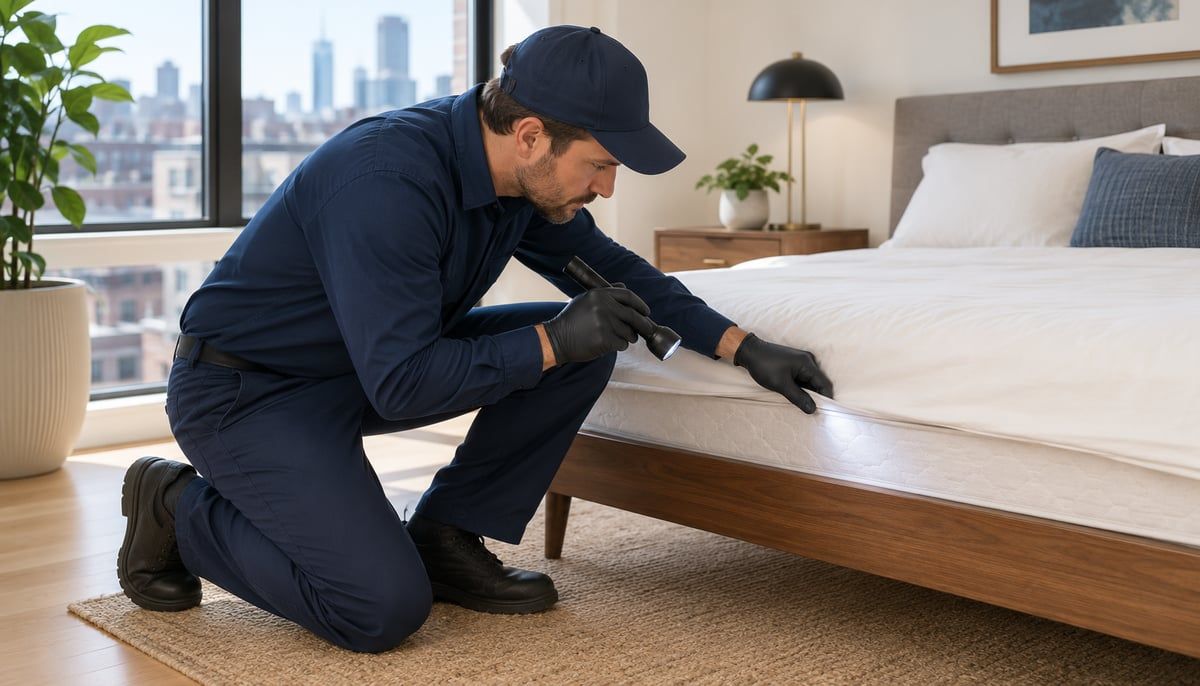
Not necessarily. Bites in a row are a common bed bug pattern, but other insects can leave similar marks. If you are not sure, a licensed pest control company can do a real inspection (checking mattress seams, box springs, and baseboards for physical evidence) before anyone pays for treatment that may not be needed.
How long does bed bug treatment take?
Heat treatment usually resolves an infestation in a single visit lasting several hours. Chemical treatment takes longer overall: expect 2 to 4 visits spaced roughly 1 to 2 weeks apart, since pesticides do not reliably kill eggs on the first pass. Either way, ask your exterminator for a realistic timeline before you sign.
Can I sleep in my apartment during bed bug treatment?
For most chemical treatments, yes, once the treated rooms have aired out for the time your exterminator specifies (often a few hours). Heat treatment requires everyone, including pets, to be out of the unit during the process itself. Confirm the specifics with your exterminator, since it varies by method and product used.
Is bed bug treatment covered by renters insurance?
It depends on the policy. Many standard renters insurance policies treat pest infestations as a maintenance issue, not a covered peril, and exclude them. Some policies or add-on riders do cover replacement of infested belongings. Check your specific policy or ask your insurer directly rather than assuming either way.
Will my landlord blame me for the bed bugs?
Some do, but bed bugs are not caused by poor housekeeping and can arrive from a neighboring unit, a shared laundry room, secondhand furniture, or simply from being carried in on clothing or luggage. A landlord trying to bill you needs actual evidence you caused the infestation, not just the fact that it happened in your unit. If you disagree with a landlord claim like this, NYC 311 and HPD are the official channels to dispute it.